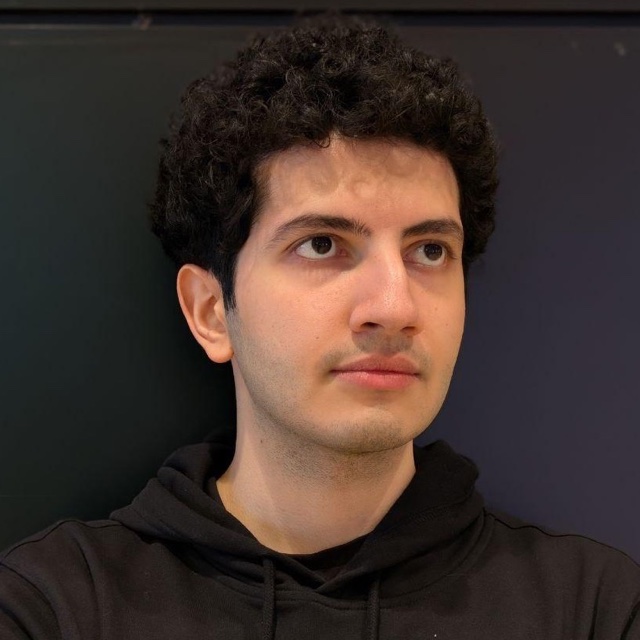
Portrait of Abtin Zandi

Toronto, Canada

Hi, I'm Abtin.

Software Engineer & AI Researcher

I build apps, teach computers to see, and occasionally convince AI agents to follow instructions.

Three things I spend most of my time on.

01

Mobile Engineering

From Kotlin to the app stores.

Android-first apps with clean interfaces, solid logic and a little on-device AI. Some live in the app stores, others in research papers.

  • Kotlin
  • Android
  • Jetpack Compose
  • CameraX
  • Coroutines
  • Ktor
  • TensorFlow Lite
  • Kotlin Multiplatform
  • Room
  • Koin
  • Gradle
  • Swift
02

Computer Vision Research

Teaching computers to notice things.

Datasets, object detection and small models that run in real time on a phone. The whole pipeline, from labelling the first image to shipping the model.

  • Python
  • PyTorch
  • OpenCV
  • Ultralytics YOLO
  • TensorFlow Lite
  • CVAT
  • Roboflow
  • Hugging Face
03

Agentic AI & Intelligent Systems

Less manual JSON. More useful agents.

LLM workflows with tool calling and real backends behind them. Agents that do useful work, not another chatbot that only shines in the demo.

  • Python
  • TypeScript
  • LangChain
  • LangGraph
  • LangSmith
  • FastAPI
  • Django
  • Hono
  • Ollama
  • Claude
  • Tavily
  • REST APIs
  • Cloudflare

How I got here.

Apparently, my career never learned how to use a single branch.

  • mainAcademic
  • teachingTeaching
  • workEngineering
  • researchResearch
  1. During my B.Sc.Branch: teaching

    Teaching Assistant

    Amirkabir University of Technology

    Alongside my own studies, I helped teach several computer engineering courses, supported students, and contributed to course exercises and technical materials.

    Courses

    • Microprocessor and Assembly Language
    • Computer Architecture
    • Information Security
    • Internet of Things (two terms)
    • Multimedia Systems
  2. 2023 – PresentBranch: work

    Android & AI Software Developer

    Uritect Inc.

    Working on practical software products in the spatial design and applied AI ecosystem, including mobile application development, image-generation workflows and API integration.

  3. 2025admissionBranch: main

    Admitted, Master of Engineering

    University of Toronto (opens in a new tab)

    Admitted to the Master of Engineering program in Electrical & Computer Engineering, with a planned start in Fall 2027.

    Details

    • Program: Electrical & Computer Engineering (MEng)
    • Status: planned start, Fall 2027
  4. 2026publications and public milestonesBranch: research

    Research Team Lead & First-author Researcher

    WalkSentry / ROD Research

    Working with a research team on pedestrian-perspective obstacle detection, assistive navigation, open datasets, and efficient computer vision models for smartphones.

    Highlights

    • Open-source ROD Dataset
    • On-device Android obstacle detection
    • Model pruning, quantization and early-exit experiments
    • Dataset annotation infrastructure
    • Three first-author arXiv preprints
  5. Fall 2027

    Planned start of the MEng at the University of Toronto. Until then, the other branches keep running.

Things I've built.

Some shipped, some published, and some still being persuaded to behave.

ROD Dataset

Open Dataset · Computer Vision

An open pedestrian-perspective dataset designed to help computer vision models recognize everyday obstacles encountered by people walking through urban environments.

images
24,326
bounding boxes
40,195
obstacle classes
25

110,000

downloads

  • Kaggle trending: #1 in Image, #1 in Object Detection, #2 in Computer Vision (at the time, not all-time).
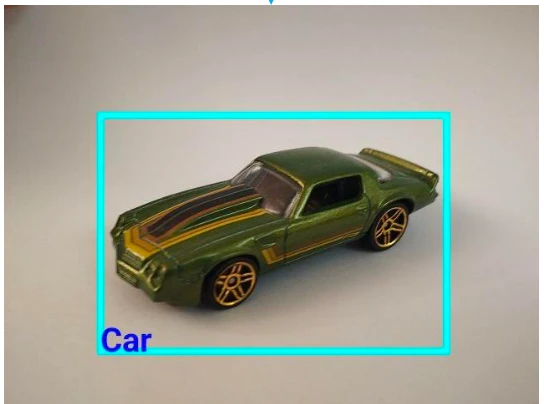
WalkSentry Android detecting a toy car, with a bounding box labelled Car

WalkSentry Android

Android · Edge AI · Research

A smartphone-based obstacle detection system that combines lightweight object detection, camera-based distance estimation, audio guidance and vibration alerts to support pedestrian awareness.

ROD Computer Vision

Deep Learning · Model Optimization

The computer vision pipeline behind the Real-Time Obstacle Detection research, covering dataset preparation, training, evaluation, model compression and mobile-compatible model export.

Reported in the paper (arXiv:2611.00040)

  • Recommended configuration: INT8 quantization with early exits
  • Average inference latency: 0.42–0.48 s on the evaluated mid-range smartphone
  • Recall: 0.81
  • Original Android detector: 18 obstacle classes

Archibi AI

Commercial Mobile Application · Generative AI

An AI spatial design app, formerly Uritect, that turns photos and sketches into interior, exterior and garden designs, with furniture discovery and professional matching. I built it end to end: the app, the backend and the AI workflows.

Brightment

Commercial Mobile Application · Applied Generative AI

Helps homeowners picture basement egress-window upgrades with AI-generated interior and exterior concepts from their own photos. I built it end to end: the app, the backend and the AI workflows.

Blink20

Mobile Application · Local-first Software

A lightweight eye-break timer for the 20-20-20 rule, with custom reminders, guided pauses, soundscapes and daily stats, all on-device. I built the whole thing.

Because apparently spending eight hours looking at code requires an app that tells me to stop looking at code.

Let's Planet

Agentic AI · Cross-platform Mobile Engineering

Coming soon · internal testing

An AI travel planner where specialized agents help you discover destinations, organize trips and coordinate the travel chores. I built the cross-platform app and the LangChain agentic workflows. In internal testing on TestFlight and Google Play, and not publicly available yet.

AnnotationFlow

Open Source · Computer Vision Infrastructure

An end-to-end dataset pipeline that cleans and deduplicates images, pre-annotates them with a configurable inference workflow and exports YOLO-ready datasets. The detection step is swappable, so changing models does not mean rebuilding the pipeline.

Astro

Hackathon Project · Multimodal AI

Winner: Most Likely to Become a StartupHack to the Future, Wilfrid Laurier University, March 2026

Turns 2D floor plans into explorable 3D spaces with multimodal AI, built with a team at the hackathon.

Prehistorical Projects

Archaeological findings from my university years. Some of them still compile.

Every developer has a repository they are slightly afraid to reopen. Here are six of mine.

Research & Publications

Occasionally, the experiments survive long enough to become papers.

  1. arXiv preprint · 2026

    Real-Time Obstacle Detection and Distance Estimation on Smartphones for Visually Impaired and Distracted Pedestrians

  2. arXiv preprint · 2026

    ROD-Dataset: A Pedestrian-Perspective Benchmark of Urban Obstacle Classes for YOLO-Based Detection

  3. arXiv preprint · 2026

    From White Canes to Edge AI: A Survey of Assistive Navigation Technologies for Blind and Low-Vision Individuals

Certificates & Continuous Learning

A few pieces of paper confirming that the browser tabs were occasionally productive.

  • June 2026

    Computer Vision

    Kaggle

  • April 2026

    LangChain — Agentic AI Engineering with LangChain & LangGraph

    Udemy

  • August 2022

    Introduction to Android Programming

    Maktabkhooneh

  • February 2022

    Version Control with Git

    Maktabkhooneh